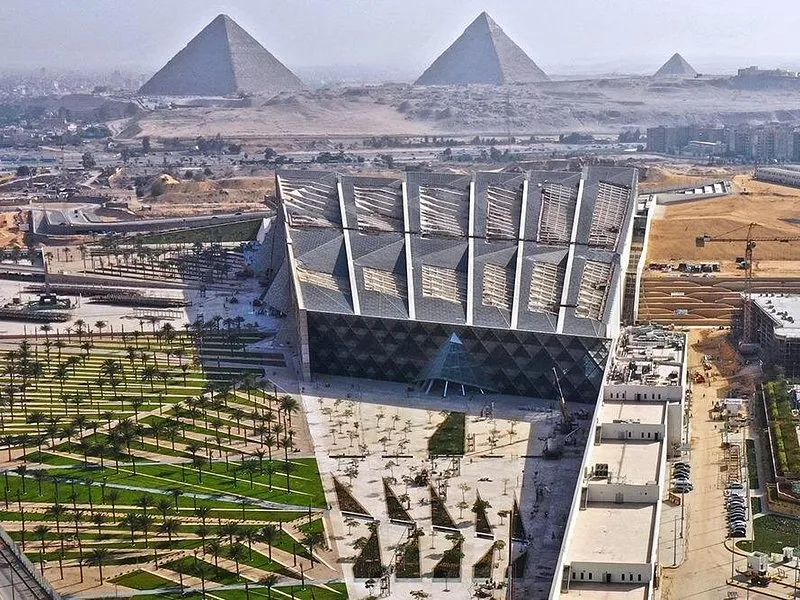
Giza, Egypt
The new home of Egypt's ancient treasures, including the complete Tutankhamun collection, displayed near the Giza pyramids in one of the largest archaeological museums in the world.
| Location | Giza Plateau, just over a mile from the Pyramids |
| Opened | 1 November 2025 |
| Collection size | ~100,000 artifacts spanning 7,000 years |
| Tickets (2026) | ~1,200 EGP main galleries · ~1,400 EGP full museum incl. Tutankhamun Galleries |
The Grand Egyptian Museum spans 5.4 million square feet — about twice the footprint of the Louvre — and is the largest archaeological museum in the world dedicated to a single civilization. Its chamfered triangular design, by Heneghan Peng Architects, lines up precisely with the Pyramids of Khufu and Menkaure.
Visitors pass the atrium and the Grand Staircase — lined with royal statues, from a colossal Khufu to a row of Hatshepsut sphinxes — before reaching 12 Main Galleries arranged chronologically from prehistory through the Greek and Roman eras, plus the dedicated Tutankhamun Galleries and the Khufu Solar Boat Museum.
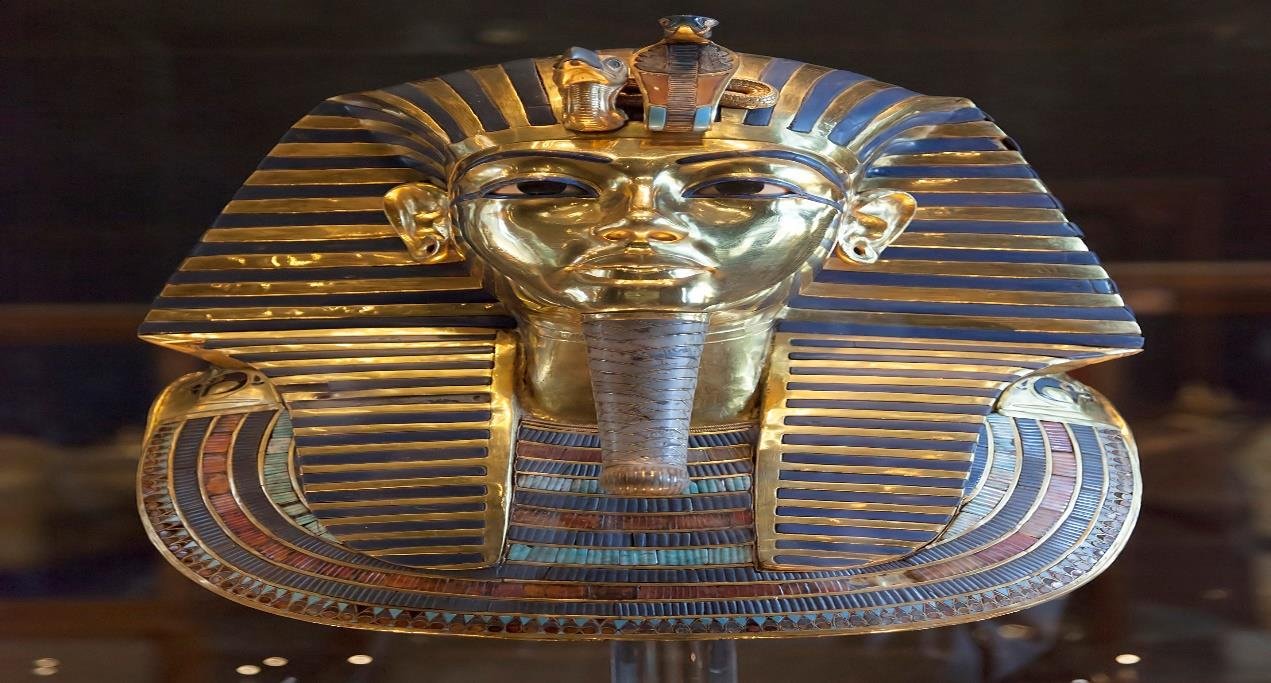
Hammered from two sheets of high-karat gold and inlaid with lapis lazuli and carnelian, this 10.23 kg mask was found resting directly over the young king's mummified face.
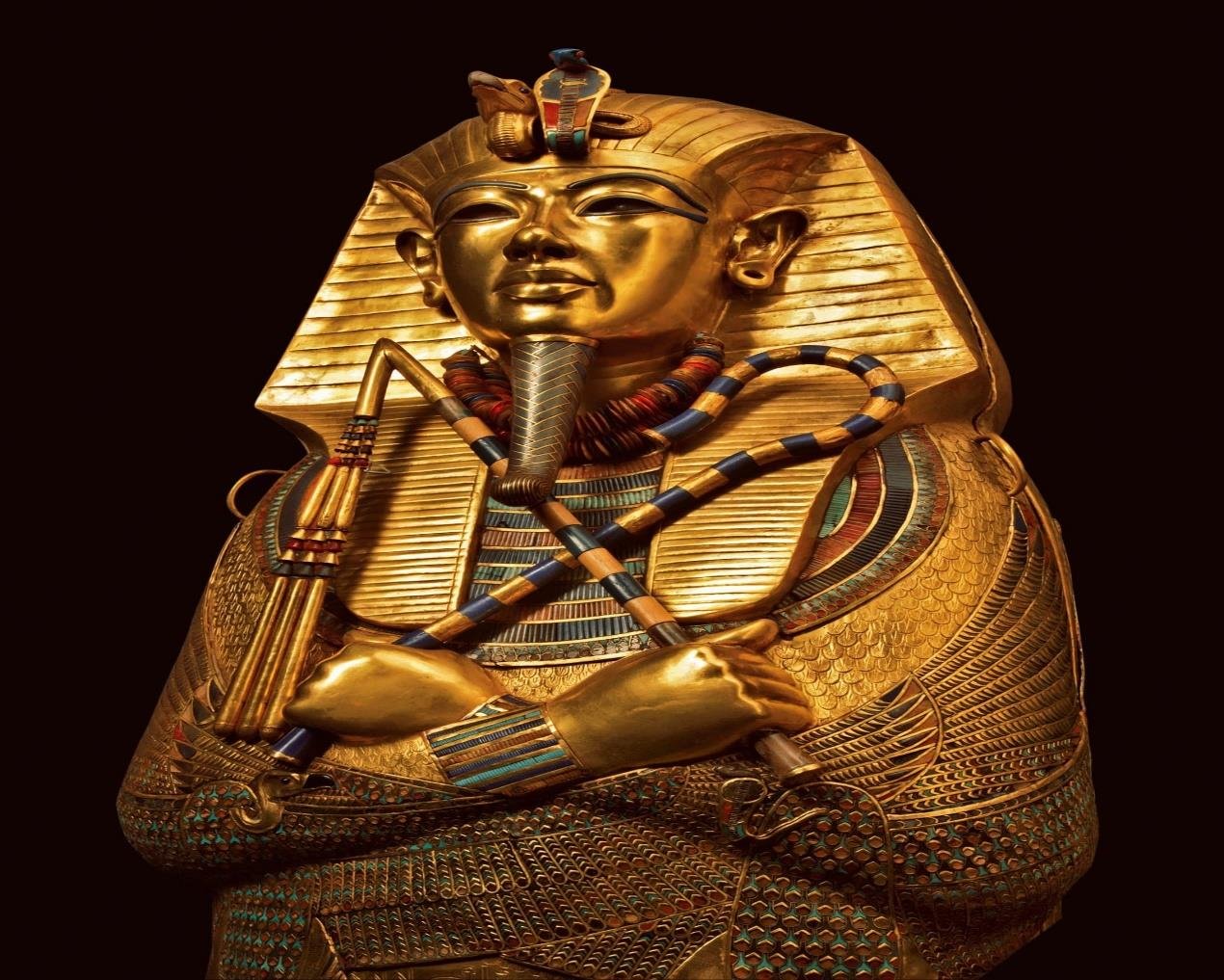
A 1.88-metre, 110.4 kg solid gold coffin nested inside two larger gilded coffins, showing the pharaoh in the pose of Osiris with the crook and flail crossed over his chest.
Tutankhamun's tomb collection includes 5,398 pieces, shown together publicly for the first time since Howard Carter's 1922 discovery.
The Colossus of Ramesses II on display is 11 meters tall and was moved here from outside Cairo's main railway station in 2006.
In 2014 the mask's ceremonial beard was accidentally knocked off during cleaning and hastily glued back with epoxy — it was properly restored with beeswax in 2015.
The museum expects up to 8 million visitors a year once it reaches full capacity.